When I first started in the explosion proof gas station supply business ten years ago, I’d meet with town planners and station owners who’d roll their eyes and say, “We don’t need all that fancy gear here—our area is quiet, no big factories, nothing to set off an explosion.” Back then, I didn’t push too hard, but now, after installing over 120 systems across 18 states, I’ve learned that the question “Are explosion proof gas stations suitable for all areas?” isn’t a yes or no answer—it’s a matter of looking at the small, easy-to-miss risks that pop up in every kind of community, not just the industrial hubs. Explosion Proof Gas Station
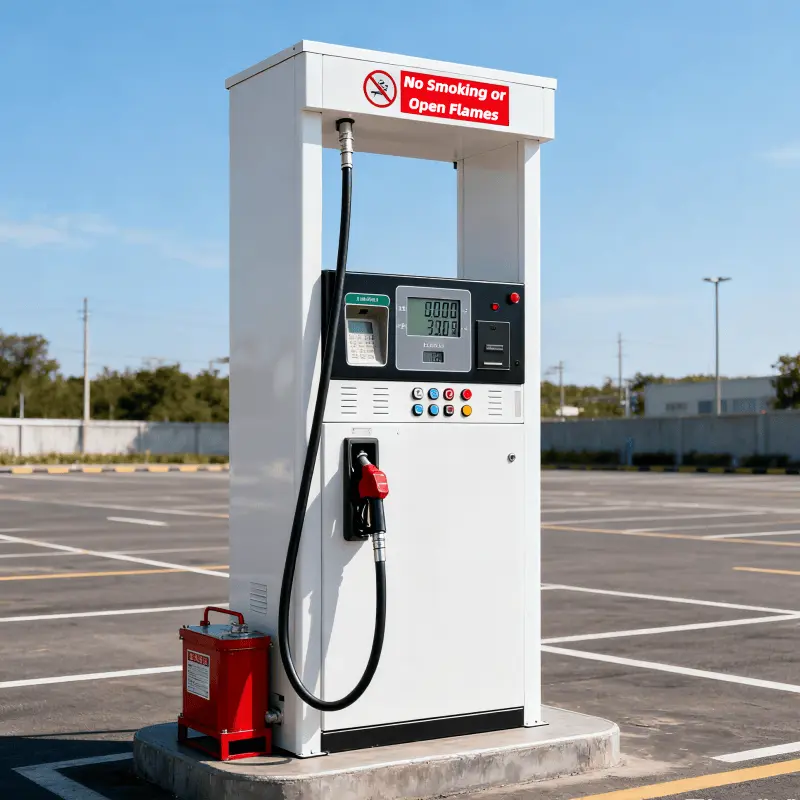
Let’s start with what makes a gas station “explosion proof” in the first place. People throw the term around like it’s some over-the-top luxury, but it’s actually a set of system upgrades that fix the two biggest hazards at any gas pump: flammable vapor leaks and electrical sparks. Standard gas pumps, for all their convenience, have small gaps in their seals that let gasoline vapor escape—vapor that’s four times heavier than air, so it pools low on the ground, in drain lines, even under awnings. Explosion proof systems change the wiring around the pumps to eliminate sparks, seal off hose connections to stop vapor leaks at the source, and add pressure sensors that shut off the pump the second vapor levels get too high. It’s not about building a bomb shelter; it’s about making a gas station safer than the one down the street that skips these upgrades.
Early on, I worked with a small town in rural Ohio that insisted they didn’t need explosion proof gear. Their only gas station had been there for 40 years, never had a major issue, so they figured spending an extra $8,000 on upgrades was a waste of tax dollars. Six months later, a teen drove a pickup that backfired while idling near the pump. The backfire sent a small spark that landed on a pocket of pooled vapor under the canopy, and the whole front of the station went up. No one was hurt, but the station was a total loss, and the town had to wait three months for a new one to be built. After that, I made a rule to stop assuming “quiet, small towns” don’t need these systems.
Now, let’s talk about areas that most people think do need explosion proof gas stations—industrial zones, cities with lots of manufacturing, ports where diesel trucks line up. A few years back, a chemical plant in Houston needed to update their employee gas station, and they called me because they didn’t want their workers to risk a fire near the plant’s ammonia tanks. The standard pump there had a minor leak in the hose connection, and our team caught it during the assessment. If a spark had hit that vapor, the explosion could’ve spread to the plant, shutting down production for weeks. That’s the obvious case: areas with existing combustible materials need extra safety. But what about places no one considers high-risk?
Take suburban strip mall areas. A gas station next to a grocery store in Atlanta had a leak in its underground storage tank line last winter. The vapor seeped up through the concrete into the mall’s parking garage. A barista from the sandwich shop lit a cigarette (yes, even in a state where indoor smoking is banned, people do it in parking garages) and the vapor ignited. The fire damaged three cars and part of the garage ceiling, and the station had to be closed for two months. That gas station was in a suburb with no heavy industry, no factories, nothing. The only difference between a fire there and one in an industrial zone was that the hazard—vapor—was hiding somewhere people didn’t check. Explosion proof systems don’t just react to sparks; they prevent the leak that leads to the hazard in the first place.
I’ve also learned that weather plays a bigger role than most people think. Last year, I installed explosion proof systems for three gas stations in Minnesota. The first station there had a standard under-pump wiring setup, and during a brutal January blizzard, the wiring got covered in ice that caused a short. A small spark from that short ignited vapor that had pooled under the pump, and the fire took out one pump before the crew could shut it down. The second station had our upgraded frost-resistant sealing on the wiring, so even when the ice melted and dripped, the connections stayed dry. The third one had standard wiring, and we did a quick fix before winter set in, adding heat tapes that kept ice from building up. That’s not an industrial issue—that’s a weather issue, and explosion proof systems are built to handle extremes that standard stations can’t.
But here’s the thing: I don’t say every single area needs explosion proof gas stations. I’ve worked with remote national parks, for example, where the only gas station is used by rangers and a handful of visitors a week. The volume of vapor there is so low that the extra cost of explosion proof systems doesn’t make sense for that small, low-traffic site. The parks’ maintenance crew does weekly checks for leaks, and that’s enough to keep it safe. The line is about risk and volume, not location. If a gas station has more than 10,000 fills a month, if it’s within a quarter mile of any building, parking garage, or roadway with vehicle traffic, or if it’s in an area that gets extreme weather—cold, heavy rain, high humidity—that’s when explosion proof systems start to make sense.
Another point I don’t hear enough people talk about is liability. Every year, thousands of small gas stations get hit with lawsuits because of vapor leaks or small fires that could’ve been prevented. A standard gas station’s insurance premium is already high, but when you add explosion proof systems, those premiums drop by 15 to 20% on average. Not because the insurance company is being nice, but because the risk of a major incident goes down drastically. Last year, a convenience store owner in Phoenix told me he installed explosion proof systems because his insurance agent said if he didn’t, they’d drop his coverage entirely after a minor vapor leak in his drain line. That’s not just a safety issue—it’s a business survival issue for small station owners, no matter where they are.
I also want to address the myth that explosion proof gas stations are only for new construction. We’ve retrofitted over 50 existing stations, some that were built in the 1950s, and the process is quick—usually a two-day weekend shutdown, so the station only loses one weekend of business, which most owners agree is worth it. The upgrade doesn’t require digging up underground tanks or tearing down canopies; it’s mostly sealing hose connections, replacing wiring near the pumps, and adding vapor sensors. For older stations, which are everywhere, this is a solution that works regardless of whether the area is urban, suburban, or even small town.
Last month, I was at a gas station in a tiny town in western Kansas—population 800, no stoplight, only one small grocery store and one gas station. The owner, a guy named Joe who’s run it for 30 years, told me he hadn’t thought about explosion proof upgrades until his nephew, a volunteer firefighter, mentioned how easy it would be for a spark from a passing semi to ignite vapor. Joe said he’d always figured explosions only happened in big cities, but after seeing the stats we brought him, he decided to do the retrofit. A week after the installation, a semi with a faulty exhaust passed the station, and the driver told Joe he saw a small flame from the exhaust—something that would’ve ignited the vapor under the old canopy. That’s the kind of small, unexpected risk that explosion proof systems are built for.
So to circle back to the original question: Are explosion proof gas stations suitable for all areas? No, but they’re suitable for most areas, especially the ones that aren’t big industrial hubs—because those are the areas where people don’t prepare for the quiet, everyday risks that lead to fires and explosions. The mistake most people make is assuming “low-risk area” equals “no risk,” but gas stations are inherently places where flammable materials are stored and moved, and even the most quiet rural or suburban town has cars passing by, weather extremes, and the occasional overlooked leak.
If you’re a town planner, gas station owner, or anyone responsible for public safety and you’re weighing whether explosion proof systems make sense for your area, don’t just go by what you’ve heard. Look at the traffic volume, the weather patterns, how close the station is to other buildings, and talk to someone who’s actually installed these systems in places like yours. I’ve seen it work in a Texas strip mall, a Minnesota small town, a Kansas rural highway, and it can work for most other places too.
If you’re ready to learn more about how explosion proof gas stations can fit your area’s needs, or if you have questions about costs, retrofits, or how the systems work specifically for your location, I’m here to help.
Explosion-proof Fuel Station References
- National Fire Protection Association (NFPA). (2022). NFPA 30A: Code for Motor Fuel Dispensing Facilities and Repair Garages. Quincy, MA: National Fire Protection Association.
- U.S. Energy Information Administration (EIA). (2021). Motor Gasoline Station Safety and Incident Trends. Washington, D.C.: U.S. Energy Information Administration.
- Occupational Safety and Health Administration (OSHA). (2020). Electrical Safety for Fuel Handling Operations. Washington, D.C.: Occupational Safety and Health Administration.
- Insurance Information Institute. (2023). Property Insurance Risks at Retail Fuel Facilities. New York, NY: Insurance Information Institute.
- American Petroleum Institute (API). (2022). Recommended Practice for Safe Operation of Retail Motor Fuel Dispensing Facilities. Washington, D.C.: American Petroleum Institute.
Shandong Jingcai Industry and Trade Co., Ltd.
As one of the most professional explosion proof gas station manufacturers and suppliers in China, we also support customized service. With abundant experience, we warmly welcome you to wholesale high quality explosion proof gas station in stock here from our factory. Contact us for free sample.
Address: Caojiazhuang Village Industrial Park, Lingcheng Town, Qufu City, Jining City, Shandong Province.
E-mail: shandongjingcai888@gmail.com
WebSite: https://www.sdjingcaicn.com/
