As a pipe fittings supplier, I get this question every single week from plumbing contractors, industrial plant managers, and even DIYers tackling their first big commercial project: what’s the real difference between a seamless pipe fitting and a welded one? It’s not just a matter of how they’re made—get this wrong, and you’re looking at unexpected downtime, leak repairs, or even safety hazards down the line. I’ve spent 12 years in this business, walking clients through everything from small residential gas lines to large-scale chemical processing facilities, so I’m breaking this down like I’d explain it to a new guy on our warehouse floor, no jargon overload. Pipe Fittings

First, let’s start with the basics: how each type is manufactured, because that’s where almost all of their differences come from. Let’s start with seamless fittings, which have been around longer than most people think. Back in the day, seamless started as solid steel billets—think of a giant, hot steel log. Technicians drill a hole through the center of that billet while it’s still heated to a malleable temperature, then push it over a piercing rod and through a series of dies to stretch it into the exact size and shape of the fitting you need. No seam, no weld line at all. No cuts, no joins, just a solid piece of metal turned into the fitting.
Welded fittings, on the other hand, start as a flat steel plate or strip. That flat metal is rolled into a cylinder, and the two edges are fused together with either arc welding (the most common for our standard pipe fittings) or, for high-pressure stuff, laser welding. The weld is then ground down smooth, but if you look at a welded fitting under a microscope, you’ll still see that line where the two edges met. It’s like the difference between a carved wooden bowl (seamless) and a wooden bowl made by gluing two flat pieces and bending them into shape (welded)—one’s a single piece, the other’s put together.
Now, let’s talk about the practical stuff that actually matters for your project, because anyone can tell you how they’re made, but what does that mean for you? Let’s start with pressure and temperature ratings. Seamless fittings are the heavy hitters here. Because there’s no weld line, there’s no weak point in the structure. That’s why they’re the go-to for high-pressure applications: oil and gas pipelines, chemical processing plants, power plant boiler systems, even cryogenic lines that handle super-cold liquids like liquid nitrogen. Welded fittings, while they’ve come a long way, have that inherent weld seam. Even with top-tier welding processes, that seam is always a point where the metal’s grain structure changes, and it’s more prone to stress cracks or corrosion over time, especially at extreme pressures or temperatures. I’ve had a client in the refinery industry switch all their elbows from welded to seamless after a welded fitting cracked and caused a 12-hour shutdown—cost them $200k in lost production, just because they’d saved a few bucks upfront on the cheaper welded ones. That’s the real cost difference, not the price tag on the fitting itself.
Next, size and availability. Let’s be honest: if you need a 2-inch or 3-inch fitting, both are easy to get, but if you’re going bigger—like 10 inches, 12 inches, even 24 inches—seamless fittings get way harder to source, and they’re way more expensive. The billet method has a limit on how big you can make a seamless fitting, because you can only drill and stretch a solid steel piece so large before it loses structural integrity. Welded fittings? They can be made in almost any size, up to 60 inches and beyond, because you just use a larger flat steel plate and roll it into the shape you need. That’s why for large-diameter projects, like municipal water mains or big industrial cooling systems, you’re almost always using welded fittings—they’re the only realistic option. Also, for custom shapes? Welded can be cut and modified on-site easier, too. If a contractor shows up with a mismatched pipe end and needs an adapter welded to a fitting, it’s way simpler to modify a welded fitting than a seamless one, since the solid seamless piece doesn’t have extra metal edges you can cut and reattach without weakening it.
Corrosion resistance is another big one, and this is where the seam matters a lot. Welded fittings, especially ones made with carbon steel, have that weld zone. Even if you use a corrosion-resistant coating, the weld can be a spot where the coating doesn’t adhere as well, or where residual stress from welding leads to small crevices that trap moisture and cause rust. Seamless fittings, since there’s no seam, have a more uniform surface that’s easier to coat evenly, and no crevices where corrosion can start. That’s a huge deal for outdoor pipelines, saltwater applications (like offshore rigs or coastal water systems), or anything that’s exposed to harsh environmental conditions. I had a coastal client a few years back who switched to seamless 4-inch elbows for their waterfront piping, and their corrosion-related repair costs dropped by 70% compared to the welded fittings they’d used before. The welds on the welded fittings would start rusting from the inside out within 3 years, while the seamless ones are still holding strong 8 years later.
Wait, but let’s not write off welded fittings entirely—they have their place, and they’re way cheaper, which is a huge factor for many projects. If you’re doing a low-pressure residential plumbing job, or a non-critical commercial irrigation line, welded fittings are more than fine. The risk of a weld failure there is almost zero, because the pressure they’re holding is way below the limit where the seam would be a problem. Also, welded fittings are easier to manufacture in smaller batches, so lead times are way shorter. If a job needs 50 welded tees, you can get them in 3 days sometimes, whereas seamless might take 2 weeks to ship from the mill. That’s a big deal for contractors working on tight deadlines.
Another point people don’t talk about: dimensional accuracy. Seamless fittings have tighter dimensional tolerances, mostly because they’re made with precision dies that shape the entire piece evenly. That’s important if you’re working with pipe that has very specific wall thickness or diameter requirements, like in aerospace or high-precision industrial applications. Welded fittings, while they’re accurate, can have slight variations in wall thickness around the seam, which might not matter for most jobs, but can cause issues in applications where even a 1/16-inch difference can lead to flow restrictions or pressure drops.
I should also mention quality testing, because that’s how we make sure both types fit for purpose. Seamless fittings go through rigorous testing: ultrasonic testing to check for internal defects, hydrostatic testing to make sure they can hold the required pressure, even magnetic particle testing to spot any surface cracks. Welded fittings also get tested, but a big part of their testing is focused on the weld seam—looking for gaps, incomplete fusion, or porosity that would make the seam weak. That extra testing means welded fittings are safe when they’re made right, but the seam is always a point of inspection that you don’t have to worry about with seamless.
Let me wrap this up with a real example to make it concrete. Last year, I had two clients come to me at the same time: one was a local hospital needing fittings for their new medical gas line, the other was a small manufacturing shop needing fittings for their low-pressure air compressor line. The hospital opted for seamless 1-inch tees and elbows, even though they cost 30% more than welded. Why? Because medical gas lines can’t afford a leak—even a tiny one can be dangerous for patients, and the high-pressure oxygen lines run at 150 psi, which is way above the threshold where a welded seam could fail. The manufacturing shop went with welded 2-inch fittings, saved $1,200 upfront, and hasn’t had a single issue in the year since installation. That’s the tradeoff, plain and simple.
So, to cut through all the tech jargon: seamless fittings are the better choice for high pressure, high temperature, corrosive environments, or any application where safety and reliability are non-negotiable. Welded fittings are the budget-friendly, easy-to-source option for low-pressure, non-critical applications where you don’t need that extra structural strength. There’s no “one is better” across the board—it all comes down to what your project requires.
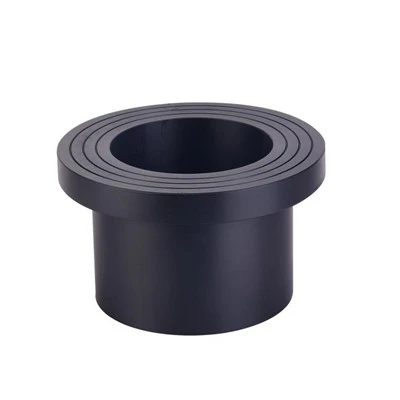
As a pipe fittings supplier, I’ve seen too many people cut corners by choosing the wrong type, and too many others pay for it later. If you’re not sure which one is right for your project—whether you’re working on a small home renovation, a commercial build, or an industrial pipeline—don’t guess. Reach out to my team to discuss your requirements. We can walk you through pressure ratings, material options, and lead times to make sure you get the right fittings for your job, no hidden costs or last-minute issues.
PE Steel Transition Fittings References
American Society of Mechanical Engineers (ASME) B16.9: Factory-Made Wrought Butt-welding Fittings
ASTM A53: Standard Specification for Pipe, Steel, Black and Hot-Dipped, Zinc-Coated, Welded and Seamless
National Association of Plumbing-Heating-Cooling Contractors (NAPHCC): Pipe Fitting Selection Guide for Commercial and Industrial Applications
Zhejiang Shengbo Pipe Fittings & Valves Industry Co., Ltd.
With abundant experience, we are one of the most professional pipe fittings manufacturers and suppliers in China. Please feel free to buy discount pipe fittings from our factory. Welcome to contact us for quotation and free sample.
Address: No. 79 Hemudu North Road, Hemudu Town, Yuyao City, Ningbo City, Zhejiang Province, China
E-mail: shengbo@zj-shengbo.com
WebSite: https://www.shengbofitting.com/
