Alright, folks! As a supplier of performance testing equipment, I often get asked how our gear measures accuracy in different scenarios. It’s a pretty crucial question because accurate measurements are the name of the game in any testing environment. So, let’s dive right in and break it down. Performance Testing Equipment
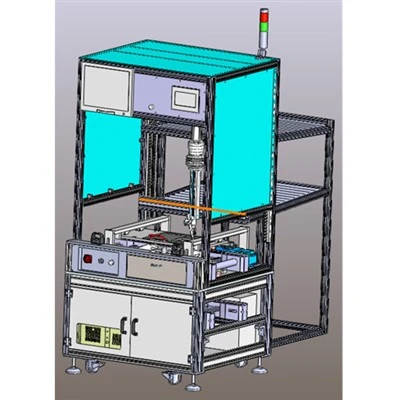
First off, let’s talk about what we mean by performance testing equipment. This can include a whole bunch of stuff, like vibration analyzers, temperature sensors, pressure gauges, and more. Each of these tools has a specific job, and accuracy is key to getting reliable results.
In Laboratory Settings
In a lab, we’ve got a pretty controlled environment. That’s a huge plus when it comes to measuring accuracy. The temperature, humidity, and other factors are all kept stable, which means our equipment can do its thing without a bunch of outside interference.
Let’s take a temperature sensor as an example. In a lab, we can use a calibrated reference thermometer to check the accuracy of our sensor. We’ll set up the sensor in a controlled-temperature chamber and measure the temperature at different points. Then we compare the readings from our sensor with those from the reference thermometer. If the difference is within an acceptable range, we know our sensor is accurate.
Similarly, for a pressure gauge, we can use a deadweight tester. This is a device that applies a known pressure to the gauge and allows us to check if the gauge is reading accurately. By comparing the gauge reading with the known pressure, we can determine the accuracy of the gauge.
Another important aspect in a lab setting is repeatability. We want our equipment to give the same result every time we run the same test. We’ll run multiple tests under the same conditions and check if the measurements are consistent. If they are, it’s a good sign that our equipment is accurate and reliable.
In Industrial Environments
When it comes to industrial environments, things get a bit more challenging. The conditions are usually less controlled, and there’s often a lot of noise and vibration.
Let’s say we’re using a vibration analyzer to monitor the health of a machine. In an industrial setting, there might be other machines running nearby that are also creating vibrations. This can make it difficult to accurately measure the vibrations from the machine we’re interested in.
To deal with this, our vibration analyzers are equipped with advanced filtering algorithms. These algorithms can help separate the vibrations from the machine we’re testing from the background noise. We can also use multiple sensors to get a more comprehensive picture of the vibrations. By analyzing the data from different sensors, we can improve the accuracy of our measurements.
For temperature sensors in an industrial environment, there might be heat sources or cold spots that can affect the accuracy of the readings. To address this, we can use sensors with built-in compensation features. These features can adjust the readings based on the ambient temperature and other factors to ensure that the measurements are as accurate as possible.
In Field Testing
Field testing is another scenario where measuring accuracy can be tricky. The conditions can vary widely from one location to another, and there might not be access to the same calibration tools as in a lab.
Let’s take a look at a scenario where we’re using a flow meter to measure the flow rate of a liquid in a pipeline. In the field, the pipeline might be in an area with a lot of magnetic interference, which can affect the accuracy of the flow meter.
To handle this, our flow meters are designed to be resistant to magnetic interference. We also use techniques like zero-point calibration before each test. This involves taking a measurement with no flow in the pipeline and adjusting the meter to read zero. This helps to compensate for any small errors in the meter’s electronics.
In addition, we often use secondary validation methods in field testing. For example, we can measure the volume of the liquid collected in a tank over a certain period of time and compare it with the flow rate measured by the meter. This can help us verify the accuracy of the meter’s readings.
How We Ensure Accuracy in Our Equipment
As a supplier, we take a number of steps to ensure the accuracy of our performance testing equipment.
First of all, we use high-quality components in our products. This includes things like sensors, circuits, and display units. By using top-notch components, we can reduce the chances of errors in the measurements.
We also have a rigorous calibration process. Before each piece of equipment leaves our factory, it goes through a series of calibration tests. We use traceable standards to ensure that our calibration is accurate and reliable. This means that our measurements can be traced back to national or international standards.
In addition, we offer regular calibration services to our customers. We know that over time, the accuracy of the equipment can drift, especially in harsh environments. By providing calibration services, we can help our customers keep their equipment in top working condition.
Conclusion

So, there you have it! Measuring accuracy in different scenarios is definitely a challenge, but with the right equipment and techniques, it’s definitely achievable. Whether it’s in a lab, an industrial environment, or the field, our performance testing equipment is designed to give you reliable and accurate measurements.
Conveyor Systems If you’re in the market for performance testing equipment and want to learn more about how our products can meet your needs, don’t hesitate to reach out to us. We’re always happy to have a chat and discuss your specific requirements.
References
- Smith, J. (2020). Principles of Performance Testing. Engineering Press.
- Johnson, A. (2021). Industrial Measurement and Calibration. Manufacturing Books.
- Brown, K. (2019). Field Testing Techniques. Science Publishing.
Ningbo Autino Automation Equipment Co., Ltd.
As one of the most professional performance testing equipment manufacturers and suppliers in China, we also support customized service. We warmly welcome you to buy advanced performance testing equipment from our factory. If you have any enquiry about quotation, please feel free to email us.
Address: No.555 Beichuan Road, Jiangbei District, Ningbo City, Zhejiang Province, P.R. China
E-mail: sales@autino.cn
WebSite: https://www.autinotech.com/
